 111
111 2
2 3
3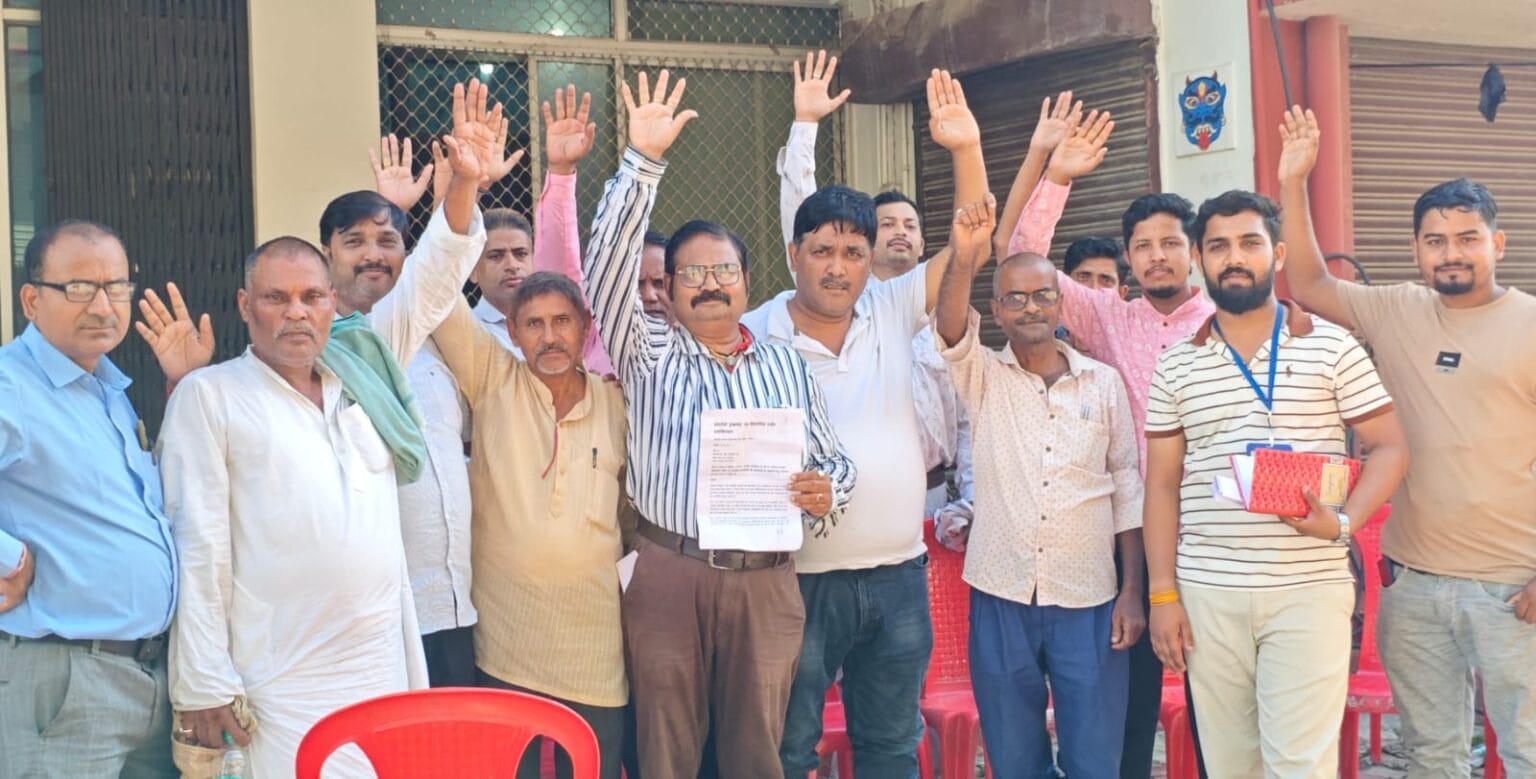
Sonauli/Maharajganj | Border Report
A decision by the Nepal Customs Agents’ Association to prohibit Indian-origin customs agents from entering and operating inside Nepal Customs has triggered a major trade crisis along the India-Nepal border. In protest, Indian customs agents continued their pen-down strike for the second consecutive day, bringing customs clearance operations to a standstill and causing an estimated NPR 1.25 billion (125 crore) revenue loss to the Government of Nepal.
The protest began after the Nepal Customs Agents’ Association reportedly barred Indian-origin agents from working inside the Bhairahawa Customs Office. In response, Indian customs agents suspended all documentation and clearance work, resulting in a complete halt in the movement of cargo trucks bound for Nepal.
According to trade sources, the Bhairahawa Customs Office normally generates NPR 900–920 million (90–92 crore) in daily customs revenue.
The combined revenue impact over two days is estimated at approximately NPR 1.25 billion (125 crore).
With customs clearance completely suspended, hundreds of cargo trucks carrying industrial raw materials, food grains, consumer goods and other imports remain stranded on both sides of the Sonauli-Belahiya border. Long traffic queues have been reported from the Indian side up to the border and along the Belahiya-Bypass in Nepal.
Trucks transporting fruits, vegetables and other perishable commodities are facing an increasing risk of spoilage due to prolonged delays, raising concerns of significant financial losses for traders and importers.
The disruption has also increased the financial burden on transporters and importers, who are now incurring additional demurrage charges, parking fees and operational expenses as vehicles remain stranded at the border.
Manufacturing units in the Bhairahawa-Butwal Industrial Corridor are likely to be affected if the deadlock continues, as essential raw materials remain stuck at the border, threatening production schedules.
Officials associated with Nepal Customs maintain that the restriction was introduced to curb unauthorised intermediaries and prevent revenue leakage. On the other hand, Indian customs agents and local transport operators argue that the sudden decision has disrupted legitimate cross-border trade and put the livelihoods of hundreds of Indian agents at risk.
Local trade bodies and business organisations are attempting to facilitate dialogue between the concerned stakeholders in the hope of restoring customs clearance operations and normalising trade at one of the busiest India-Nepal border crossings.